

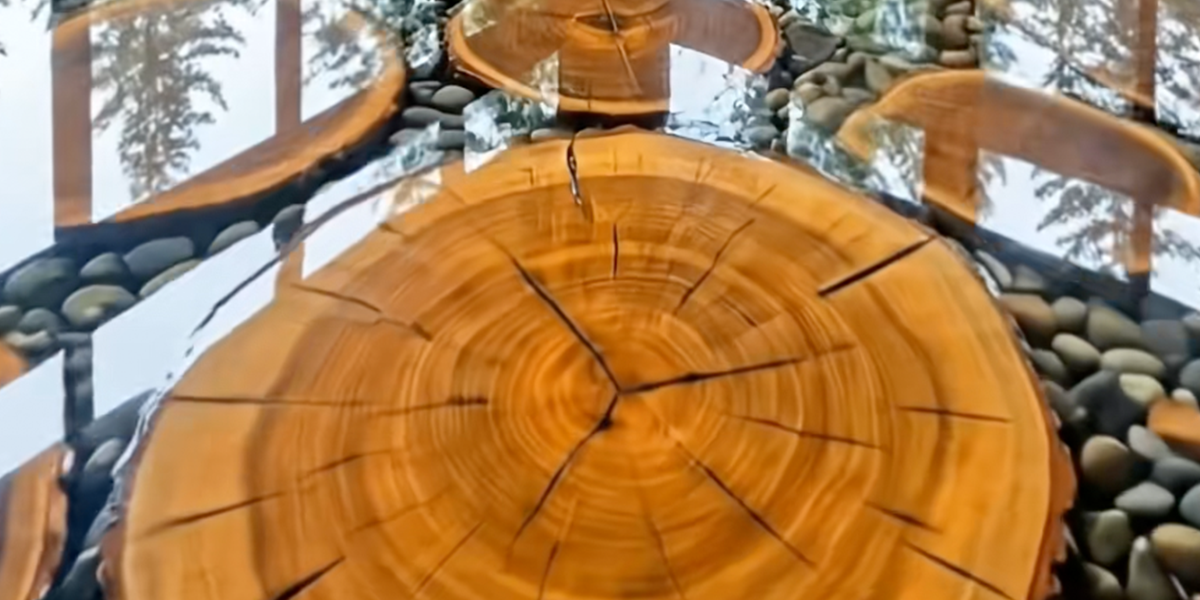
Who would’ve thought the AI movie trend would hit hardscaping? But here we are.
A TikTok video showing a “perfect” epoxy river stone installation has 17 million views. Slow-motion resin pours. Large river stones with flawless spacing. A glossy, architectural finish that looks absolutely real.
Except it’s not real. It’s AI-generated. And it could be the next question you get surprised with. Here’s how to handle it.

The Pattern You’re About to See
A customer walks in with their phone and shows you that video. “I want exactly this for my patio. Do you have 1-3″ river stones?”
Here’s what they don’t know: they’re looking at a computer rendering that ignores basic physics. And they’re about to ask you to sell them premium stone for an application designed to fail.
When that installation degrades and sheds aggregate within a year, guess who gets blamed? Not the AI. Not the viral video. Your materials.
Why Large River Stones Can’t Work in Epoxy

The AI videos show 1-3″ Mexican beach pebbles spaced apart with thick epoxy filling the gaps. It looks stunning. It violates how these systems actually function.
Epoxy pebble systems require complete stone encapsulation. Proper installations use small aggregate (1/4″ to 3/8″) mixed with resin until every pebble is coated, then troweled tight. The goal is maximum stone-to-stone contact with minimal exposed resin. When you space large stones apart, you create exactly what kills these systems: extensive exposed epoxy surfaces.
UV exposure destroys exposed resin. This is the primary failure mode. Epoxy degrades under sunlight, losing its bond strength. In proper systems with tight packing, exposed resin is minimal and protected with UV-stable topcoats. In those AI videos, half the surface is unprotected resin that will break down, allowing stones to loosen and water to infiltrate.
Large stones move during installation. Smooth 1-3″ river stones shift and settle in wet epoxy. Maintaining precise spacing across an entire surface requires constant manual repositioning. The AI locks stones in place with a mouse click. Reality requires a team fighting gravity and time constraints as the epoxy begins to cure.
The resin ratios become absurd. Proper systems use roughly 15-20% epoxy by volume. Those AI gaps push that to 40-50% or higher, making epoxy the primary material instead of the binder. Cost skyrockets, cure heat increases, and you’re left with a resin slab with decorative rocks in it—not a stone surface.
Yes, Epoxy Stone Systems Work—Just Not With This Product
Pool deck epoxy pebble systems are proven and durable. But they use small aggregate with tight packing where resin coats contact points between stones that are already touching. The stone carries the load. The epoxy locks it together.
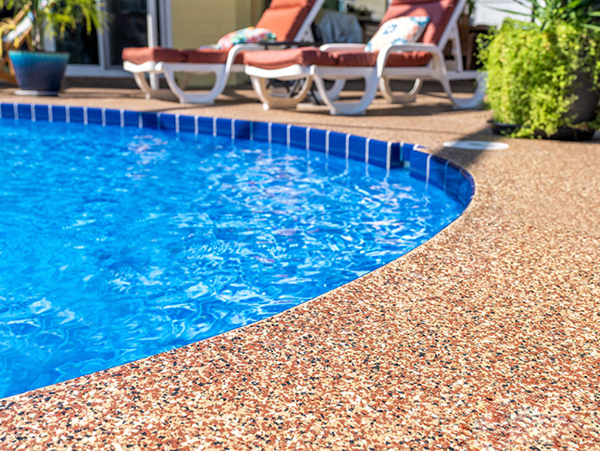
That’s a fundamentally different product than 1-3″ river stones. Understanding this distinction helps customers see that epoxy systems aren’t fake—they just don’t work with large pebbles.
How to Handle the Conversation
When that phone comes out, you have two choices: make a quick sale that becomes an angry customer in a year, or position yourself as the expert who steers them right.
Acknowledge it: “That video looks incredibly realistic. AI rendering has gotten very sophisticated.”
Explain the problem: “What you’re seeing is computer-generated. The AI doesn’t understand that 1-3″ river stones can’t work in epoxy this way. The exposed resin degrades under UV exposure, stones loosen, and the surface fails.”
Redirect honestly: “Mexican beach pebbles are premium stone that performs beautifully in dry-laid landscaping, mortar-set patios, and decorative features where you can actually see and appreciate them. Using them in epoxy wastes the stone and creates a surface designed to fail.”
If they’re committed to an epoxy stone surface, point them toward small aggregate systems designed for that application. If they love the look of large river stones, you’ve got proper applications that will last decades.
Why This Matters for Your Business
Short-term, you might lose a few sales. Long-term, you build a reputation as the retailer who won’t sell materials for doomed projects.
The customer you talk out of an AI-inspired disaster becomes a customer for life. The one you sell materials to anyway comes back angry, leaves bad reviews, and tells everyone your “defective” stone ruined their patio.
AI-generated content isn’t going anywhere. These videos will keep going viral, each one sending more customers through your door. Each conversation is an opportunity to demonstrate expertise and build trust, or to make a sale you’ll regret.
The Bottom Line
We wholesale Mexican beach pebbles because we believe in the product when it’s used correctly—which means not forcing 1-3″ river stones into epoxy systems designed for small aggregate.
When you see that phone come out with 17 million views behind it, you’re not looking at a lost sale. You’re looking at a chance to be the expert who ensured their project actually worked.